Country
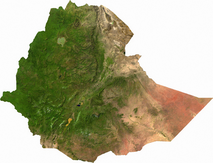
Ethiopia
Ethiopia, one of the world’s oldest nations, is located in the Horn of Africa and is known for its rich history, cultural diversity, and dramatic landscapes. Home to ancient civilizations and early human fossils like Lucy, it was never fully colonized, preserving its unique heritage. The country’s geography ranges from the highlands and Simien Mountains to the Danakil Depression and is the birthplace of coffee.
Addis Ababa, the capital, is the center of African diplomacy as the headquarters of the African Union. Ethiopia is predominantly Christian, with a significant Muslim population, and celebrates rich traditions like Timkat and Meskel. With rapid economic growth, the country is emerging as a key player in East Africa. The country celebrates unique festivals such as Timkat and Meskel, showcasing its deep religious and cultural traditions. Ethiopia’s economy, once heavily reliant on agriculture, is now growing rapidly in sectors like manufacturing and services, positioning it as an emerging force in East Africa.
Building resilience in regreened landscapes through dynamic multi-stakeholder and multisectoral partnerships
Partner Organization(s): World Agroforestry (ICRAF), World Vision (WV), Catholic Relief Services (CRS), Cooperative for Assistance and Relief Everywhere (CARE), Oxfam, and Sahel Eco.
Country/Region(s): Ethiopia, Ghana, Kenya, Mali, Niger, Rwanda, Senegal, and Somalia
Adaptation Sector Thematic Area(s): Strengthen Coordination and Collaboration Between Member States
Summary:
Over the last five years, the Regreening African programme has played a crucial role in restoring stability to regional communities whose livelihoods are dependent on healthy lands, by addressing land degradation and fostering climate resilience, through agroforestry. This initiative has built a dynamic multi-stakeholder partnership, which has bolstered transboundary adaptation efforts and successfully bridged the gap between science, policy and implementation at various scales.
Private sector partnerships for sustainable livelihoods: the case of solar energy access in refugee communities in Ethiopia
Partner Organization(s): IKEA Foundation
Country/Region(s): Ethiopia
Adaptation Sector Thematic Area(s): Human Settlements & Infrastructure
Summary:
Improving the livelihoods and self-reliance of refugee and host communities through increasing energy access through solar mini-grids and cooking solutions.
Participatory Climate Action for Peace Climate-Smart Villages Case Study Community Based Participation
Partner Organization(s): CGIAR Trust Fund
Country/Region(s): West Africa, East Africa including the Horn of Africa, South Asia, Southeast Asia, Latina America (forthcoming: South Africa)
Adaptation Sector Thematic Area(s): Community-Based, Participatory Climate Action
Summary:
The project aims to create Climate Smart Villages (CSVs) and promote the adoption of Climate-Smart Agriculture (CSA) approaches while encouraging national governments to participate. It also strives to set new standards for conflict-sensitive and peace-responsive climate action through innovative methods and toolkits, serving as a model for such initiatives. Climate-Smart Villages are examples of local actions that promote adaptation and resilience to climatic stresses.
Climate Finance for Transboundary Adaptation and Natural Resource Management: How the NDC Delivery Lab is Mobilizing Resources
Partner Organization(s): African Group of Negotiators Experts Support (AGNES), the Alliance of Biodiversity and CIAT, the International Livestock Research Institute (ILRI), and the Global Green Growth Institute (GGGI).
Country/Region(s): Kenya, Ethiopia, and South Sudan
Adaptation Sector Thematic Area(s): New and Innovative Finance Mechanisms
Summary:
The NDC Delivery Lab is an approach being used to translate policy into actionable and bankable investments that achieve implementation of climate action. The NDC Delivery Lab approach brings together a range of stakeholders to jointly identify and prioritize problems and then co-create solutions with the aid of innovations and inventions from research and innovation centres. This is translated into high-impact bankable investment plans which are implemented as projects on the ground. The
Drought risk financing and index- based livestock insurance in northern Kenya and southern Ethiopia
Partner Organization(s): Donors to the International Livestock Research Institute (ILRI), the World Bank through the Kenyan government, livestock keepers, private insurance companies, ILRI, and the Kenyan and Ethiopian governments.
Country/Region(s): Kenya and Ethiopia
Adaptation Sector Thematic Area(s): Disaster Risk Management
Summary:
De-risking investments in livestock value chains is possible through provision of index-based livestock insurance. Pastoralists can build resilience against droughts by insuring their livestock, and other services can be bundled together with the insurance to help improve herd health, offer additional financial services and provide climate information services. Index based Livestock Insurance (IBLI), for which standard premiums and payouts are determined within defined geographic insurance units, relies on Normalized Different Vegetation Index (NDVI) satellite imagery, a proxy for available biomass, to make payments to those policyholders living in regions that are affected by poor forage availability compared to the average conditions. Compensation is provided early in the season to minimize livestock losses by supporting drought coping strategies.
Integrated and participatory landscape management in Ethiopia
Partner Organization(s): Promoting Autonomous Adaptation (PAA) project
Country/Region(s): Ethiopia
Adaptation Sector Thematic Area(s): Environment, Ecosystems, and Biodiversity
Summary:
A large part of Ethiopia’s landscape is characterised by mountainous, undulating terrain that is highly susceptible to soil degradation and erosion. Land degradation and deforestation are caused by natural factors, such as soil and wind erosion, as well as population pressure. Soil loss in Ethiopia due to water erosion is a serious economic and environmental challenge. These factors contribute to Ethiopia’s agricultural productivity and its food security is highly compromised. Soil and water conservation has been a priority for the government for the last two decades and it was given due consideration within the first phase of the Growth and Transformation Plan.
No resources found for Ethiopia.
No resources found for Ethiopia.
No resources found for Ethiopia.
Contact Us
Phone Number:
(+252) 617 963 284
icaep@igad.int
Location:
KM5, Afgoye Road, Mogadishu, Somalia
Sat – Thurs: 8:00 am – 5:00 pm
News & Updates
Signup to receive the latest IGAD CAEP news, articles, and resources, sent straight to your inbox every month.
Connect With Us
Contact Us
Phone Number:
(+252) 617 963 284
icaep@igad.int
Location:
KM5, Afgoye Road, Mogadishu, Somalia
Sat – Thurs: 8:00 am – 5:00 pm
News & Updates
Signup to receive the latest IGAD CAEP news, articles, and resources, sent straight to your inbox every month.