
Country
South Sudan
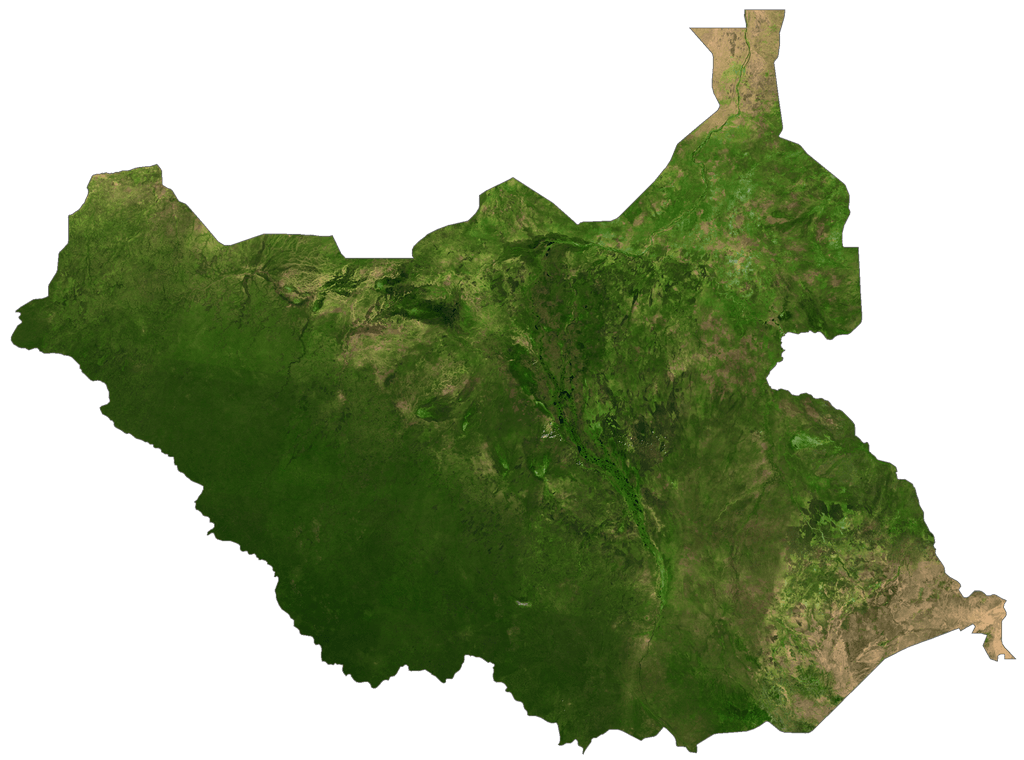
South Sudan, the world’s youngest country, gained independence from Sudan in 2011 following decades of conflict and civil war. It is located in East-Central Africa, bordered by Sudan to the north, Ethiopia to the east, Kenya and Uganda to the southeast, the Democratic Republic of the Congo to the southwest, and the Central African Republic to the west. The country is rich in natural resources, particularly oil, which plays a key role in its economy, although the majority of its population relies on subsistence farming.
The capital, Juba, is the largest city and the political and economic hub of South Sudan. The country is home to many ethnic groups, with the Dinka and Nuer being the largest. South Sudan has a culturally diverse society, and while English is the official language, many indigenous languages are widely spoken. The population is predominantly Christian, though traditional African religions are also practiced.
Participatory Climate Action for Peace Climate-Smart Villages Case Study Community Based Participation
Partner Organization(s): CGIAR Trust Fund
Country/Region(s): West Africa, East Africa including the Horn of Africa, South Asia, Southeast Asia, Latina America (forthcoming: South Africa)
Adaptation Sector Thematic Area(s): Community-Based, Participatory Climate Action
Summary:
The project aims to create Climate Smart Villages (CSVs) and promote the adoption of Climate-Smart Agriculture (CSA) approaches while encouraging national governments to participate. It also strives to set new standards for conflict-sensitive and peace-responsive climate action through innovative methods and toolkits, serving as a model for such initiatives. Climate-Smart Villages are examples of local actions that promote adaptation and resilience to climatic stresses.
Climate Finance for Transboundary Adaptation and Natural Resource Management: How the NDC Delivery Lab is Mobilizing Resources
Partner Organization(s): African Group of Negotiators Experts Support (AGNES), the Alliance of Biodiversity and CIAT, the International Livestock Research Institute (ILRI), and the Global Green Growth Institute (GGGI).
Country/Region(s): Kenya, Ethiopia, and South Sudan
Adaptation Sector Thematic Area(s): New and Innovative Finance Mechanisms
Summary:
The NDC Delivery Lab is an approach being used to translate policy into actionable and bankable investments that achieve implementation of climate action. The NDC Delivery Lab approach brings together a range of stakeholders to jointly identify and prioritize problems and then co-create solutions with the aid of innovations and inventions from research and innovation centres. This is translated into high-impact bankable investment plans which are implemented as projects on the ground. The
Community-led flood preparedness and anticipatory action in South Sudan
Partner Organization(s): UNHCR, WFP, FAO and humanitarian partners
Country/Region(s): South Sudan
Adaptation Sector Thematic Area(s): Community-Based, Participatory Climate Action
Summary:
As the risk of climate events continues to increase, community-led initiatives in South Sudan are leading action to address climate risks using community coordination mechanisms with dedicated focus on area-specific needs to identify, engage and coordinate arrangements for flood preparedness and anticipatory action. Five area-based task forces are taking the lead in the overall coordination of anticipatory actions to reinforce community preparedness and resilience to flooding events in collaboration with other humanitarian actors.
No resources found for South Sudan.
No resources found for South Sudan.
No resources found for South Sudan.
Contact Us
Phone Number:
(+252) 617 963 284
icaep@igad.int
Location:
KM5, Afgoye Road, Mogadishu, Somalia
Sat – Thurs: 8:00 am – 5:00 pm
News & Updates
Signup to receive the latest IGAD CAEP news, articles, and resources, sent straight to your inbox every month.
Connect With Us
Contact Us
Phone Number:
(+252) 617 963 284
icaep@igad.int
Location:
KM5, Afgoye Road, Mogadishu, Somalia
Sat – Thurs: 8:00 am – 5:00 pm
News & Updates
Signup to receive the latest IGAD CAEP news, articles, and resources, sent straight to your inbox every month.