How does climate exacerbate
root causes of conflict in Sudan?
Climate Security Pathway Analysis
Niklas Sax, Gamal Mohamed Hassan, Abdimajid Nunow Abdi, Ignacio Madurga-Lopez, Bia Carneiro, Theresa Liebig, Peter Läderach and Grazia Pacillo
This factsheet gives answers on how climate exacerbates root causes of conflict in Sudan, using an impact pathway analysis. Two main impact pathways are identified:
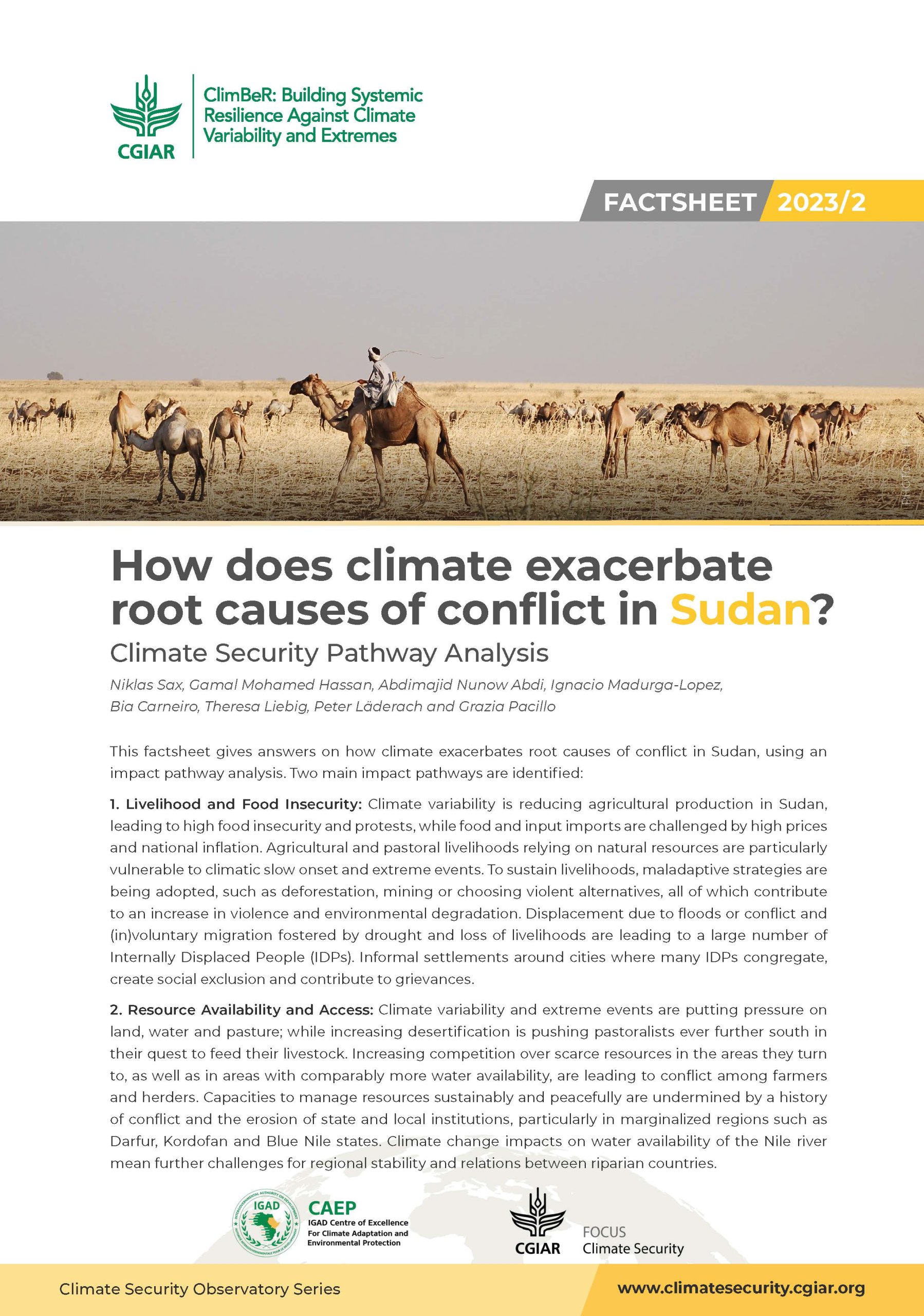
1. Livelihood and Food Insecurity: Climate variability is reducing agricultural production in Sudan, leading to high food insecurity and protests, while food and input imports are challenged by high prices and national inflation. Agricultural and pastoral livelihoods relying on natural resources are particularly vulnerable to climatic slow onset and extreme events. To sustain livelihoods, maladaptive strategies are being adopted, such as deforestation, mining or choosing violent alternatives, all of which contribute to an increase in violence and environmental degradation. Displacement due to floods or conflict and (in)voluntary migration fostered by drought and loss of livelihoods are leading to a large number of Internally Displaced People (IDPs). Informal settlements around cities where many IDPs congregate, create social exclusion and contribute to grievances.