Country
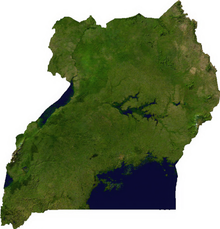
Uganda
Uganda is a landlocked country in East Africa, known for its diverse landscapes, wildlife, and rich cultural heritage. It is bordered by Kenya, South Sudan, the Democratic Republic of the Congo, Rwanda, and Tanzania. Often referred to as the “Pearl of Africa” due to its natural beauty, Uganda boasts stunning landscapes that include savannas, mountains, lakes, and rainforests. One of its most famous natural attractions is Lake Victoria, the largest lake in Africa and a key source of the Nile River. The country is also home to a variety of wildlife, including mountain gorillas in Bwindi Impenetrable Forest, and numerous national parks, such as Queen Elizabeth National Park.
The capital city, Kampala, is a bustling hub that reflects the nation’s diverse culture and history. Uganda is a multilingual country with over 40 languages spoken, and its population is made up of various ethnic groups, including the Baganda, Banyankole, and Basoga.
Supporting the inclusion and engagement of gender and youth in climate policies in Uganda and Kenya
Country/Region(s): Uganda and Kenya
Adaptation Sector Thematic Area(s): Gender and Youth (Cross-cutting)
Summary:
Most countries recognize the value of intergenerational and gender-responsive approaches to adapting to climate change. Several countries have made concerted efforts to promote inclusivity in the development and design of their NDCs, their National Adaptation Plans and national climate policies and legal frameworks. This includes Uganda, Zambia, Kenya and South Africa. Gender inclusivity is essential in adaptation efforts because women have unique knowledge and experiences related to climate impacts that can improve the resilience and sustainability of the country’s policies. Similarly, young people will be the most affected by climate change in the future, raising the importance in gathering their views and ideas when attempting to develop resilient policy options for adaptation. Young people are also often at the forefront of innovation and technology, both crucial elements for improving resilience.
Participatory Climate Action for Peace Climate-Smart Villages Case Study Community Based Participation
Partner Organization(s): CGIAR Trust Fund
Country/Region(s): West Africa, East Africa including the Horn of Africa, South Asia, Southeast Asia, Latina America (forthcoming: South Africa)
Adaptation Sector Thematic Area(s): Community-Based, Participatory Climate Action
Summary:
The project aims to create Climate Smart Villages (CSVs) and promote the adoption of Climate-Smart Agriculture (CSA) approaches while encouraging national governments to participate. It also strives to set new standards for conflict-sensitive and peace-responsive climate action through innovative methods and toolkits, serving as a model for such initiatives. Climate-Smart Villages are examples of local actions that promote adaptation and resilience to climatic stresses.
Forecast-based financing for disaster risk reduction in Uganda, Niger, Togo and Mozambique
Partner Organization(s): German Red Cross (GRC), Google, GiveDirectly, International Federation of Red Cross, UN OCHA, and National Institute of Disaster Management (INGD).
Country/Region(s): Uganda, Niger, Togo and Mozambique
Adaptation Sector Thematic Area(s): Leveraging Artificial Intelligence (AI)
Summary:
At the onset of climate disasters, disaster risk responses are often delayed due to a lack of available finance and poorly planned response measures. Forecast- based Financing (FbF) is a model that seeks to pre-emptively overcome these barriers by working with communities at- risk, meteorological services, agencies specialized in disaster risk reduction and other relevant national actors, to agree on a set of priority responses, and the necessary budget, that would be initiated prior to the onset of a disaster, when the disaster- forecast reaches a certain trigger ‘threshold’. In essence, FbF releases humanitarian funding for planned activities based on forecast information which reduces risks, enhances preparedness, and makes disaster risk management more effective.
No resources found for Uganda.
No resources found for Uganda.
No resources found for Uganda.
Contact Us
Phone Number:
(+252) 617 963 284
icaep@igad.int
Location:
KM5, Afgoye Road, Mogadishu, Somalia
Sat – Thurs: 8:00 am – 5:00 pm
News & Updates
Signup to receive the latest IGAD CAEP news, articles, and resources, sent straight to your inbox every month.
Connect With Us
Contact Us
Phone Number:
(+252) 617 963 284
icaep@igad.int
Location:
KM5, Afgoye Road, Mogadishu, Somalia
Sat – Thurs: 8:00 am – 5:00 pm
News & Updates
Signup to receive the latest IGAD CAEP news, articles, and resources, sent straight to your inbox every month.