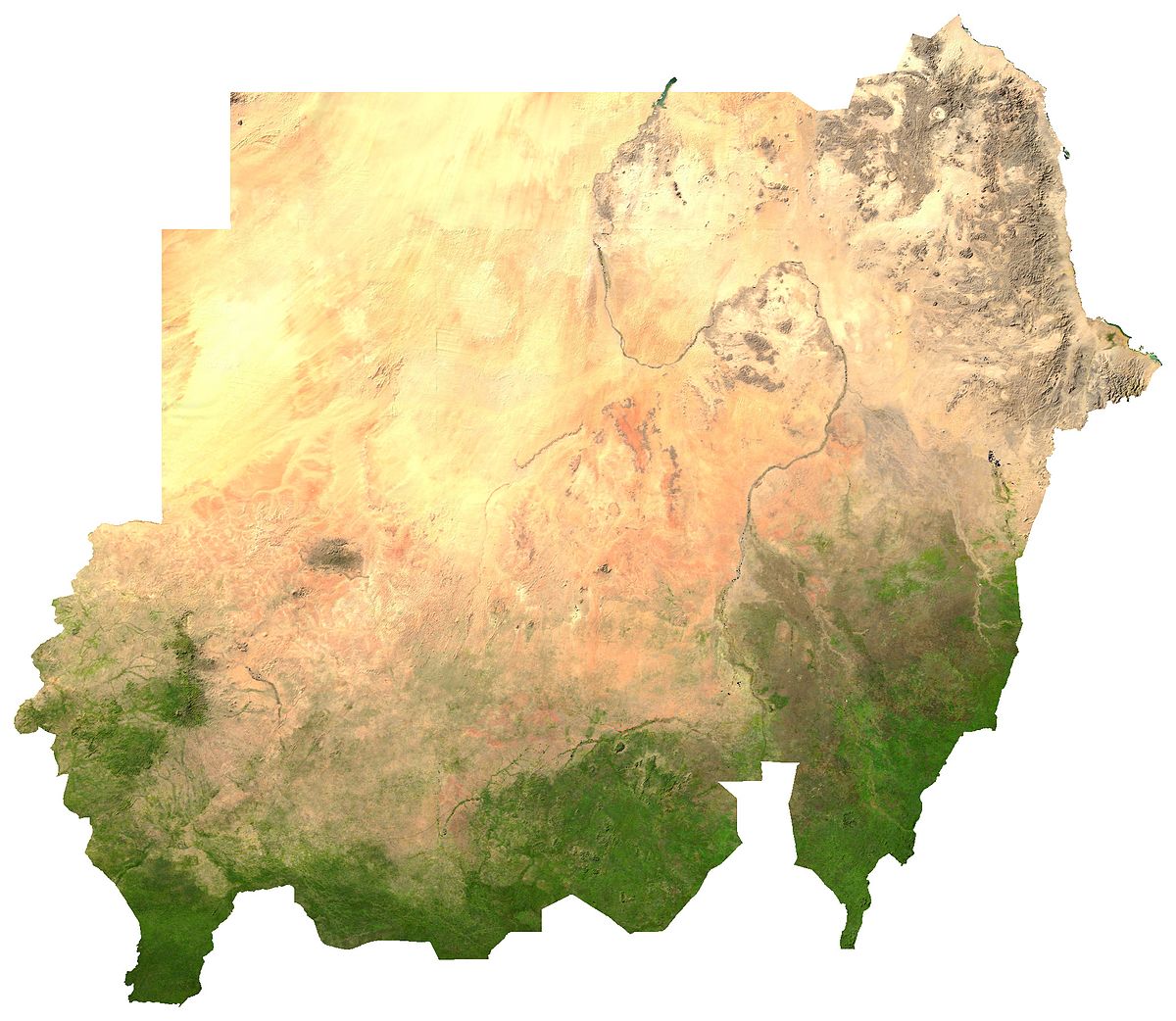
Sudan
Sudan is a large country in northeastern Africa, bordered by Egypt to the north, the Red Sea to the northeast, Eritrea and Ethiopia to the east, South Sudan to the south, the Central African Republic to the southwest, Chad to the west, and Libya to the northwest. It is geographically diverse, with deserts, savannas, and the fertile Nile River running through it, which has been a lifeline for agriculture and civilization for thousands of years. Sudan has a rich historical heritage, home to ancient Nubian kingdoms and the site of many pyramids, particularly in the region of Meroë.
The capital, Khartoum, sits at the confluence of the Blue and White Nile rivers and is the political, cultural, and economic center of the country. Sudan’s population is ethnically and culturally diverse, with Arab, African, and Nubian influences. The official languages are Arabic and English, and the vast majority of the population is Muslim, predominantly following Sunni Islam.