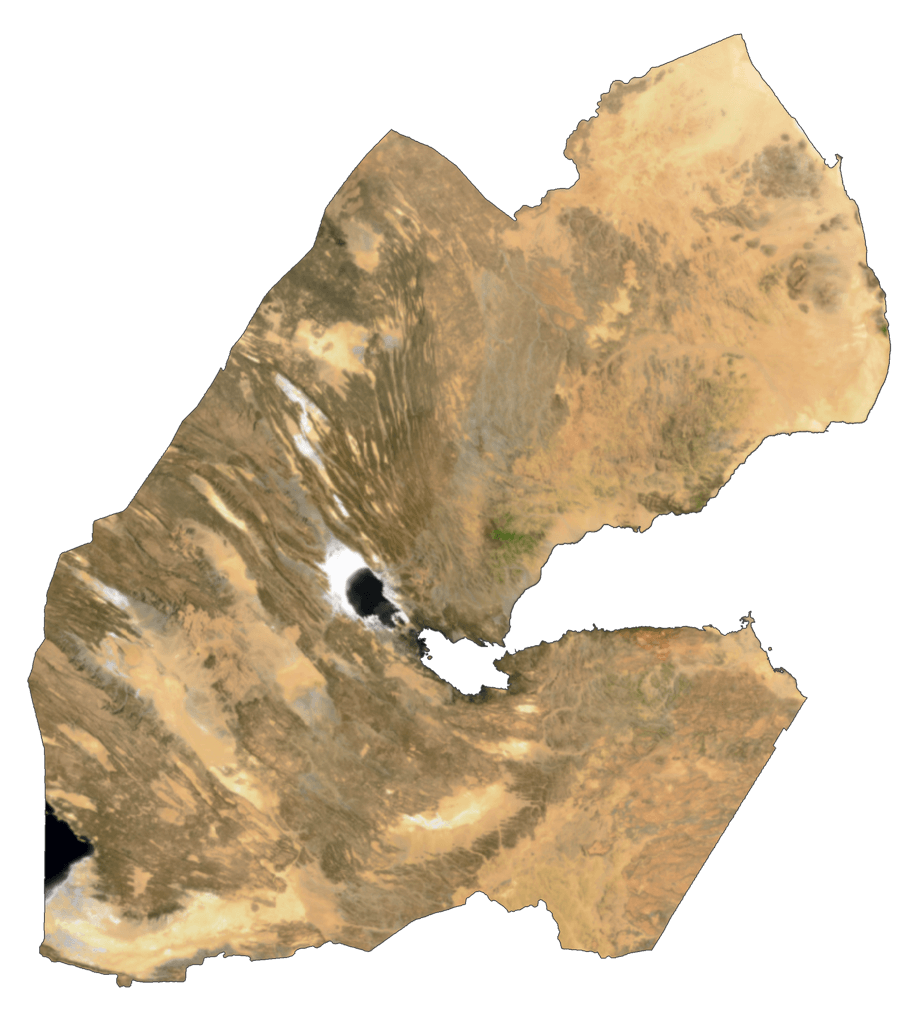
Djibouti
Djibouti is a small but strategically important country located in the Horn of Africa, bordered by Eritrea to the north, Ethiopia to the west and south, and Somalia to the southeast, with the Red Sea and the Gulf of Aden to the east. Due to its location at the crossroads of major shipping routes, including the Bab-el-Mandeb Strait, Djibouti serves as a critical gateway between the Red Sea and the Indian Ocean. The country is home to several military bases operated by global powers like the U.S., France, and China, making it a key player in international geopolitics.
The capital, Djibouti City, is the country’s largest urban center and a vibrant port city. Djibouti has a predominantly Somali and Afar population, with Islam being the dominant religion. The official languages are French and Arabic, reflecting its colonial history under France. Djibouti’s economy largely relies on port services, international shipping, and logistics, but the country is also developing sectors like tourism, thanks to its stunning landscapes, such as Lake Assal (one of the lowest points on Earth) and the striking desert and volcanic formations in the country’s interior.